Platysmal Bands & the Jawline-Neck Transition: Understanding Lower-Face Anatomy
Vertical neck bands form as the superficial platysma muscle becomes more active while overlying collagen and subcutaneous fat thin out. Learn how targeted lower-face assessment softens downward pull along the jawline.
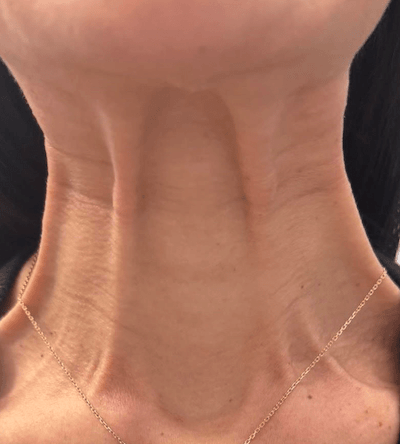
- The platysma is a thin muscular sheet spanning the lower jaw to the clavicle that exerts downward pull on the lower face over time.
- Targeted relaxation of hyperactive bands develops gradually over 14 days and typically lasts 3 to 6 months.
- Realistic expectations and combination skin-quality planning are essential, as muscle relaxation softens band prominence rather than surgically removing excess skin.
Why Vertical Platysmal Neck Bands Develop
Over time, anatomical changes in the neck can subtly influence the contour of the lower face. One of the most common presentations is platysmal banding: vertical muscular bands running from the mandibular border down the neck. These bands become more prominent as the superficial platysma muscle exerts downward pull while overlying dermal thickness decreases.
While platysmal banding is a normal anatomical variation over time, patients may enquire about clinical assessments aimed at softening downward muscular pull along the neck and jawline profile.
Platysmal bands become visible through a combination of muscular activity and changes in the supporting structures beneath the skin. The platysma muscle is a thin sheet running from the lower jaw down the neck; as dermal collagen and elastin gradually diminish and subcutaneous tissue thins, the muscular borders become more discernible during speech and expression.
Additionally, progressive mandibular bone remodelling, cumulative UV exposure, smoking, and significant weight fluctuations can increase band visibility, which is why presentation varies substantially from person to person.
How Treating Platysmal Bands Can Help
The platysma muscle plays a role in pulling the lower face downward. By carefully placing small amounts of product into targeted areas of this muscle, it can be encouraged to relax. This can reduce the appearance of the bands and may also create a subtle lifting effect through the jawline and lower face.
In suitable candidates, moderating downward platysmal pull supports a more balanced transition along the jawline and neck while preserving normal neck mobility.
The Process
- Comprehensive consultation - We begin by assessing your facial anatomy and discussing your goals to determine if this treatment is right for you.
- Tailored treatment plan - The product amount and placement are customised to suit your individual needs.
- Gradual results - Effects develop over the days following treatment, with full results typically visible 2 weeks post treatment.
- Longevity - Results are temporary, generally lasting between 3-6 months before a maintenance appointment may be required.
Expectations are key
While clinical management of platysmal bands can soften neck and jawline tension in suitable candidates, results vary from person to person. Factors such as dermal thickness, baseline muscle strength, and underlying tissue laxity all influence the outcome.
The clinical aim is conservative softening of hyperactive muscular bands rather than an overcorrected or altered appearance. Depending on skin laxity, staged dermal collagen protocols may also be discussed during consultation. Maintenance sessions are required to sustain muscular relaxation, and complete elimination of neck bands is not always achievable.
Safety & Considerations
All cosmetic treatments carry potential risks and side effects, which will be explained during your consultation so you can make an informed decision. This treatment is not suitable for everyone, and outcomes will vary from person to person.
Related Services & Consultations
Related Clinical Journal Articles
Supporting Facial Lift, Structure & Dermal Collagen Without Surgery
Lip Clefts & Median Vermilion Notches: Anatomical Assessment & Proportion Balancing