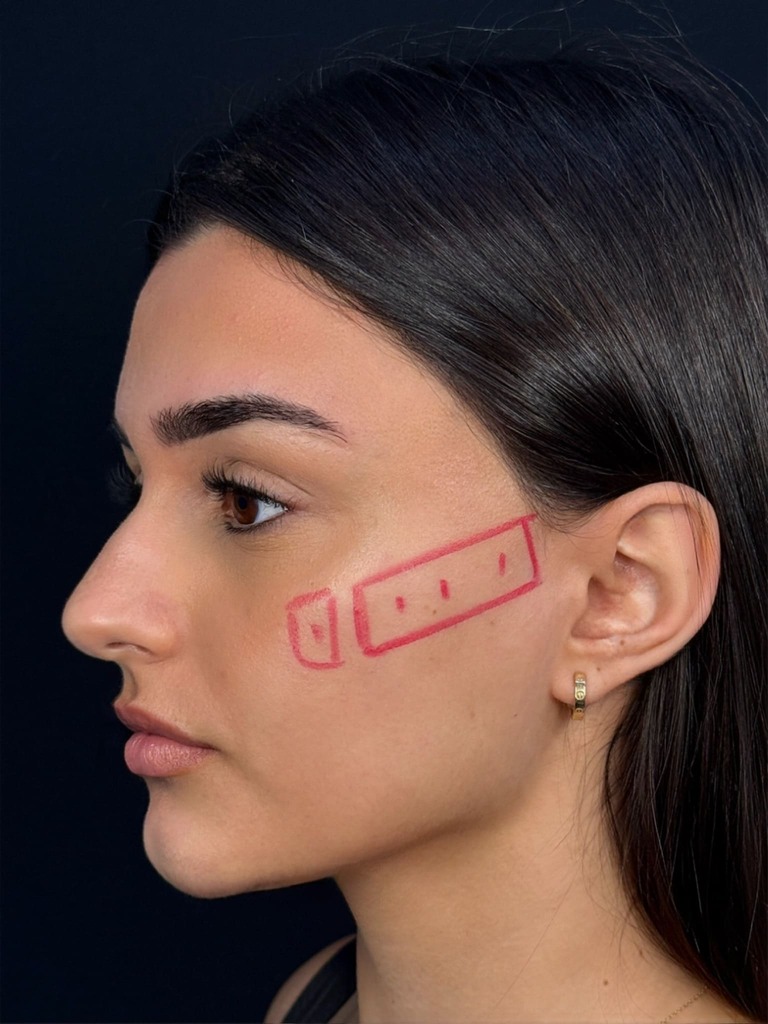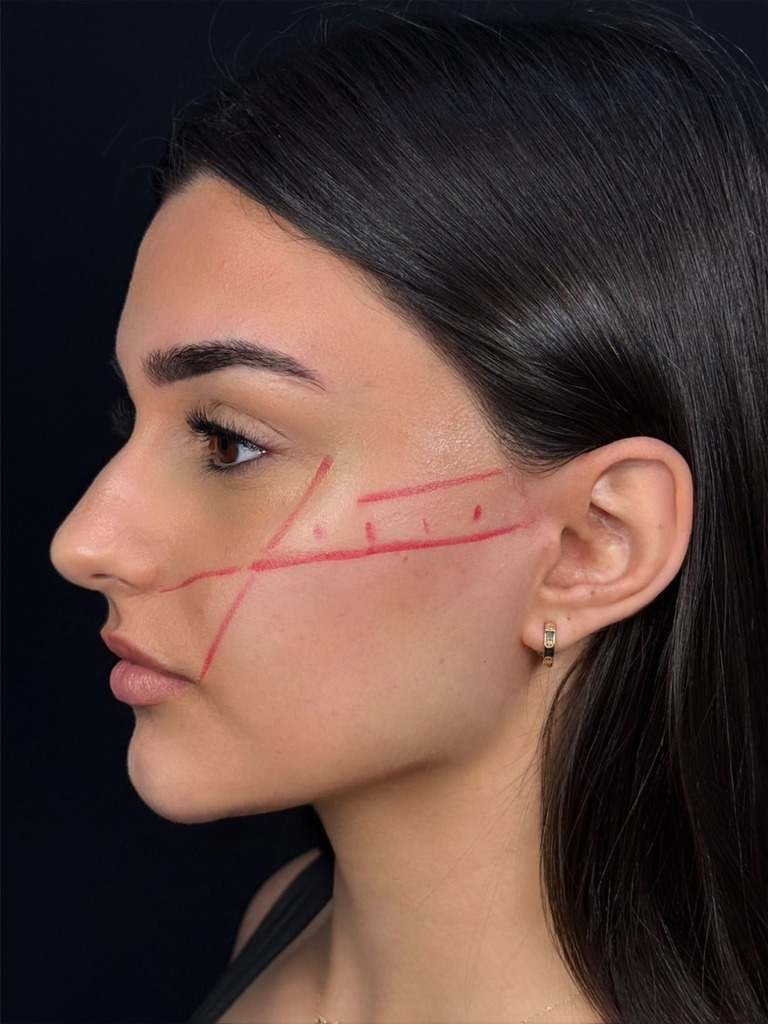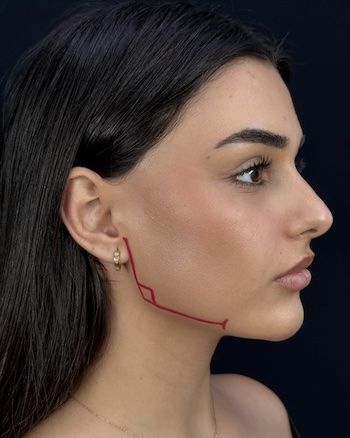
Jawline Definition
Consultations for Structure and Sharpness
Non-Surgical Jawline Definition
Non-surgical jawline contouring is a minimally invasive treatment aimed at enhancing the definition and symmetry of the lower face. Over time, natural ageing, genetics, and lifestyle factors can contribute to volume loss, sagging skin, or asymmetry along the mandibular area (lower jaw). These changes may result in a less defined jawline, a heavier or square facial appearance, or an imbalance in facial proportions.
This treatment is designed to subtly restore balance and create a harmonious facial profile without surgery. By targeting specific areas along the jawline, clinicians can:
- Improve jawline definition and contour for a more sculpted lower face
- Address facial asymmetry caused by uneven muscle or tissue distribution
- Restore lost volume in the mandibular angle or surrounding areas
- Enhance overall facial balance, complementing the cheeks, chin, and lower face
Non-surgical jawline contouring focuses on natural enhancement rather than dramatic change, helping patients achieve a more refined and youthful appearance while preserving their individual facial features.
This treatment is suitable for people who notice changes in their jawline due to ageing, have naturally soft or less defined lower faces, or wish to subtly enhance their facial structure without undergoing surgical procedures. A consultation with a qualified clinician is recommended to determine if this treatment aligns with your facial goals and to establish an individualised plan.
Initial Consultation
During your first consultation, a qualified clinician will:
- Discuss your facial concerns and desired outcomes.
- Conduct a detailed facial assessment.
- Explain the treatment process, including potential side effects, recovery expectations, and post-treatment care.
- Advise if the treatment is suitable for you or suggest alternative options if appropriate.
What to Expect from the Treatment
The procedure is performed in a clinical environment by a trained professional. Treatments are customised based on your facial structure and individual goals.
Potential Side Effects
As with any cosmetic procedure, individual responses may vary. Common side effects may include:
- Temporary numbness or altered sensation around the treated area.
- Mild swelling, redness, bruising, or itching, typically resolving within 7 days.
- Minor tenderness or discomfort for 2–3 days.
- Small lumps, which usually resolve naturally over time.
If side effects persist or cause concern, it is recommended to contact your treating clinician for advice.
Post-Treatment Aftercare
To support optimal results and minimise side effects, follow these general guidelines:
- Avoid touching or applying pressure to the treated area.
- Refrain from applying makeup for 24 hours.
- Avoid strenuous exercise for 24 hours and hot environments (saunas, steam rooms) for 48 hours.
- Delay non-urgent dental procedures for at least two weeks.
- Minimise alcohol consumption and UV exposure for 48 hours.
Your clinician will provide detailed written aftercare instructions specific to your treatment. Results may vary depending on factors such as age, skin type, metabolic rate, and lifestyle habits.
Booking a Consultation
Jawline contouring is suitable for individuals seeking non-surgical options to address:
- Facial asymmetry
- Volume loss
- Loss of lower facial definition
A consultation with a trained clinician is recommended to discuss your options, review your goals, and determine whether this treatment is appropriate for you.
FAQs
How does jaw definition relate to cheek contouring?
Jawline definition and cheek contouring work together to support overall facial balance. The cheeks provide mid-face structure, while the jawline frames the lower face. When both areas are proportionate, the face can appear more harmonious and refined. During a consultation, your clinician may assess how these areas interact and whether addressing one or both would best support your facial structure.
Do jaw definition treatments help soften smile lines?
Jawline definition treatments primarily focus on enhancing structure in the lower face rather than directly targeting smile lines. However, improving overall facial balance and support may indirectly influence how other facial features appear. If smile lines are a primary concern, your clinician may recommend alternative or complementary treatment options based on your individual assessment.
What is jawline definition treatment?
Jawline definition treatment is a non-surgical cosmetic treatment designed to enhance the shape, structure and symmetry of the lower face. The treatment is tailored to each individual, with careful planning based on facial anatomy, lifestyle factors and cosmetic goals. Treatment suitability, potential risks, expected outcomes and aftercare requirements will be discussed thoroughly during your initial consultation.
Is jawline definition treatment suitable for everyone?
No, which is why an individual assessment is required to ensure it’s the right option for you.
Jawline definition treatment may not be recommended if you:
- Have an active skin infection or inflammation in the treatment area
- Are pregnant or breastfeeding
- Are diagnosed with certain autoimmune conditions or significant immunosuppression (assessed on a case-by-case basis)
- Have uncontrolled medical conditions, such as diabetes
- Have known allergies to treatment components
- Have had recent dental infections or dental procedures, where a delay in treatment may be advised
During your consultation, a qualified clinician will review your medical history and ensure the treatment is planned safely and appropriately.
Can jawline definition treatment be combined with other face treatments?
Definitely. It’s commonly paired with cheek contouring to support facial balance and proportion. Where skin laxity or crepey texture along the jawline and neck affects definition, treatments such as radiofrequency microneedling, HIFU skin tightening or laser resurfacing may also be recommended. These treatments aim to stimulate collagen production, helping to minimise the appearance of nasolabial lines and improve overall skin firmness.
Is there downtime with jawline definition?
This treatment typically involves minimal downtime. Mild, temporary effects such as swelling, redness, tenderness or bruising may occur and typically subside within a few days.
Your clinician may recommend avoiding strenuous exercise, heat exposure, alcohol and pressure on the treated area for a short period to support recovery. Individual responses can vary, so it’s important to monitor the area following treatment. If you experience any complications or worsening side effects, contact us or your general practitioner for further guidance.
What should I expect after a jawline definition appointment?
Most clients are able to resume their normal daily activities immediately after treatment. Results may become more noticeable over the following one to two weeks. Your clinician will provide personalised aftercare advice to support optimal recovery.
Jawline definition results are temporary and may require maintenance over time. The timing of any follow-up treatment varies based on individual factors such as metabolism, lifestyle and desired outcomes.