
PRF Under-Eye & Tear Trough Treatment Sydney
Anticoagulant-free Platelet-Rich Fibrin (PRF) protocols across Miranda (Sutherland Shire) and Outlet Village, Warwick Farm (Liverpool) for thin, crepey lower-eyelid skin, dark vascular under-eye shadowing, and patients unsuited to water-binding gels.
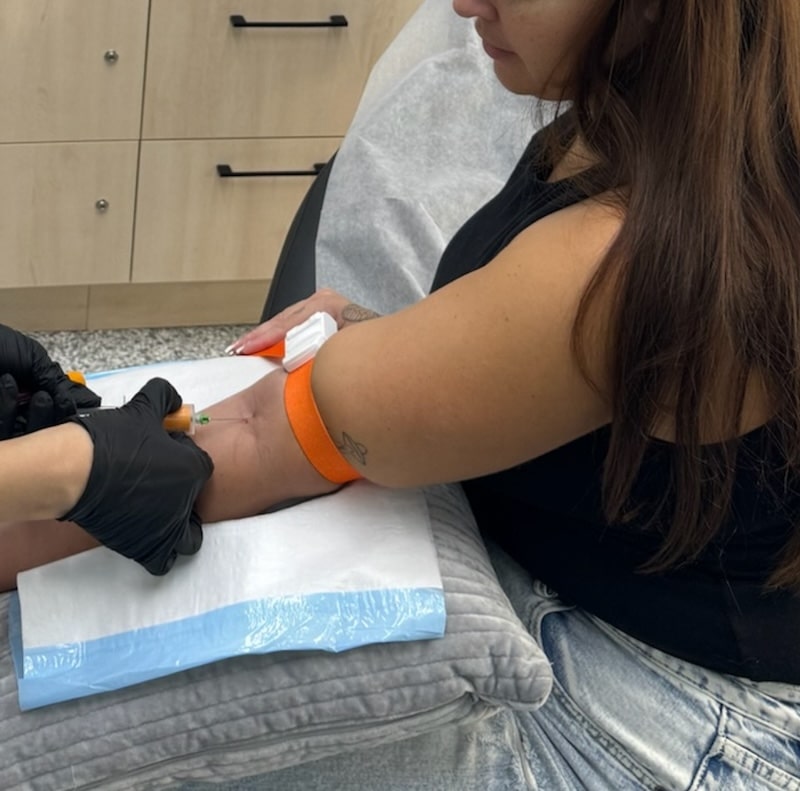
Lymphatic & Lid Check
Every under-eye consultation begins with a lower-lid snap test and morning fluid-retention check so we distinguish vascular darkness from structural tear trough hollowing or malar bags.
Atraumatic Placement
Delivered gently via a single lateral micro-cannula entry point across the infraorbital dermis within the 15-minute fibrin polymerisation window to minimise periorbital bruising.
Sustained Fibrin Scaffold
Unlike standard plasma that disperses within hours, the three-dimensional PRF fibrin mesh holds platelets and leukocytes in place, releasing PDGF, VEGF, and TGF-beta over 7 to 14 days.
| Clinical Factor | Under-Eye PRF (Platelet-Rich Fibrin) | Traditional Hydrophilic Gel Approach |
|---|---|---|
| Source & Matrix | Prepared from your own blood without chemical anticoagulants or synthetic additives | Cross-linked hyaluronic acid gel (prescription clinical evaluation required) |
| Fluid & Puffiness Profile | Does not attract chronic water retention once initial 3–5 day swelling resolves | Can attract water or appear bluish (Tyndall effect) if lower-lid lymphatics are sluggish |
| Mechanism in 0.5mm Dermis | 7-to-14-day fibrin growth-factor release supporting dermal thickness & collagen | Structural volume support beneath deep anatomical tear trough hollows |
| Typical Protocol | Course of 3 sessions spaced 4 weeks apart | Assessed individually alongside mid-face cheek support during consultation |
Do not apply ice directly to under-eye PRF zones for 72 hours, as extreme cold can interfere with platelet and fibrin activity.
Under-Eye PRF Frequently Asked Questions
Why do your clinicians frequently recommend PRF for the under-eye area?
Lower-eyelid skin is approximately 0.5mm thick and has delicate lymphatic drainage. In patients prone to morning puffiness, thin translucent skin showing dark purple vascularity, or fine crepey lines right beneath the lashes, PRF supports intrinsic dermal collagen thickness using your own fibrin matrix without adding hydrophilic synthetic gel.
How long does under-eye puffiness last after a PRF session?
Because PRF deposits a liquid fibrin matrix that forms a soft biological scaffold under the eye, temporary fullness or mild puffiness for 48 to 96 hours (3 to 5 days) is normal and expected. Sleeping on an extra pillow for the first 2 nights and avoiding salty foods or alcohol for 48 hours helps fluid settle smoothly.
Why must PRF be delivered within 15 to 20 minutes of centrifugation?
Because PRF tubes contain zero chemical anticoagulants, physiological fibrin polymerisation begins as soon as the 4-minute low-G spin completes. Our clinicians draw and spin immediately beside you so the liquid PRF transitions into its three-dimensional scaffold right after placement via blunt micro-cannula.
How many under-eye PRF sessions are recommended?
We typically recommend an initial course of 3 under-eye PRF sessions spaced 4 weeks apart, as dermal collagen synthesis builds progressively over 8 to 16 weeks, followed by maintenance every 6 to 12 months.