March 8, 2026
Will PRP/PRF Help Stop My Hair Loss?
Am I a Good Candidate for PRP Hair Loss Treatment? PRP therapy can be a highly effective, non-surgical solution for early to


Am I a Good Candidate for PRP Hair Loss Treatment? PRP therapy can be a highly effective, non-surgical solution for early to
At Mapp Aesthetics we have seen PRP become one of the most talked-about treatments for hair loss and honestly, for good reason. When it works, it works really well (just remember this is NOT a cure for hair loss). It uses your body's own growth factors to wake up sluggish follicles, strengthen the hair you have, and slow down shedding. Patients who are good candidates often see meaningful improvements.
But I'll be upfront, PRP isn't right for everyone. Part of my job in the consultation is being honest about this, because setting realistic expectations from the start is what leads to good outcomes and avoids disappointment down the line.
The first thing I look at is your medical history. PRP works by harnessing your platelets, so if there's anything affecting how your blood clots or how your platelets function, we need to tread carefully. Conditions I'd want to discuss before proceeding include platelet disorders, bleeding or clotting conditions, active or blood-related cancers, autoimmune diseases that aren't well controlled, chronic liver disease, diabetes, severe anaemia, active infections, sepsis, and pregnancy. Your safety always comes first we won't push ahead if there's any concern.
Medications matter too. Some of the most common ones I see affecting PRP results are blood thinners like warfarin, DOACs, or clopidogrel, long-term steroid use, and anti-inflammatory pain relievers taken too close to treatment. In some cases, we can work around the timing I'll go through your medication list with you and we'll figure out what's feasible.
I also want to be honest about what PRP can and can't do for different types of hair loss. PRP needs living, viable follicles to work with. If you've had extensive hair loss for a long time, or your scalp looks very smooth and shiny in the thinning areas, that's often a sign that the follicles have already closed off. The same applies to scarring types of alopecia conditions like lichen planopilaris or discoid lupus where the follicle structure itself has been damaged. And if you're currently going through chemotherapy or radiotherapy, that's not the right time either.
One more thing I always discuss: commitment. PRP isn't a one-off treatment, and it's not going to regrow a completely bald patch. If you're hoping to avoid multiple sessions, or you want to try PRP in isolation when other treatments would really help alongside it, we need to talk about whether this is the right path for you right now.
Sometimes patients aren't ideal candidates yet, but they could be with a bit of preparation. Smoking, nutritional deficiencies (low iron, vitamin D, B12, or zinc are particularly common), and underlying inflammation can all blunt PRP's effectiveness. Sorting these things out beforehand can make a real difference to results.
The patients I see getting the best outcomes are usually those with early to moderate androgenetic hair loss the classic pattern thinning who are still actively shedding and have follicles that are dormant rather than gone. They're motivated, open to combining PRP with medical hair-loss treatments where appropriate, and realistic about the timeline. Hair restoration takes time. We're working with your body's natural growth cycles, and that doesn't happen overnight.
Every patient I see gets a proper consultation before anything else. We look at your hair loss pattern, go through your history and medications, talk about your lifestyle, and have an honest conversation about what's achievable. If PRP isn't right for you, I'll tell you and I'll tell you what might be.
If PRP isn't the right fit whether that's for medical reasons, a dislike of needles, or personal preference that doesn't mean we're out of options. One treatment I've been really pleased to offer as an alternative is ProCell Therapies Hair Microchanneling with Growth Factor Serum. See below for more inforamtion.
ProCell combines microchanneling a precise, controlled form of microneedling with a lab-derived growth factor and cytokine serum. The idea is similar to PRP in terms of what we're trying to achieve, but the method is quite different.
We use a precision stamping device to create tiny micro-channels in the scalp. This increases blood flow to the follicles, triggers the scalp's natural repair response, and creates a pathway for the growth factor serum to penetrate deeply into the follicle environment. The result is a combination of mechanical stimulation and targeted serum delivery encouraging dormant follicles to re-enter the active growth phase without any injections or blood draw.
Here is the link to Procell's website for more information Visit Link
I think of them as two different routes to a similar destination. Both aim to deliver growth factors to rejuvenate follicles. The difference is mainly in how we get there.
With PRP, we take a blood sample, spin it down in a centrifuge, and inject the concentrated plasma directly into the scalp. With ProCell, there's no blood draw, no centrifuge, and no injections just the microchanneling device and the serum applied topically. Clinical studies suggest the results in terms of hair count and thickness can be comparable. For patients who find the idea of PRP daunting, ProCell often feels like a much more approachable option.
I always make a point of setting realistic expectations with every patient. ProCell can produce genuinely good results thicker, denser hair, improved scalp health but it works best on follicles that are dormant rather than completely inactive. If your scalp is smooth and shiny in the affected area, I'll be honest with you that results are likely to be limited.
Most patients need an initial course of 5–6 sessions, spaced about two weeks apart. After that, maintenance treatments every six months or so help to sustain the results. Once follicles re-enter the active growth phase, they can stay there for up to three years but this varies between individuals, and ongoing maintenance makes a real difference.
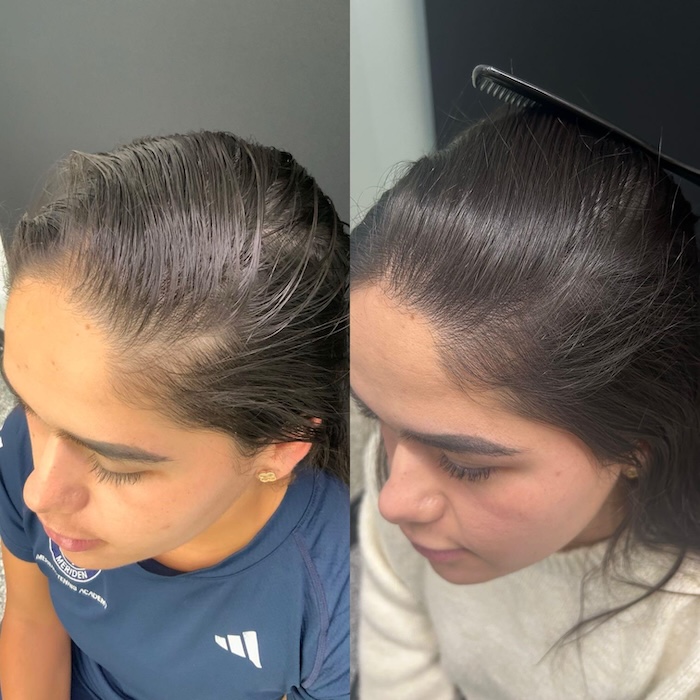
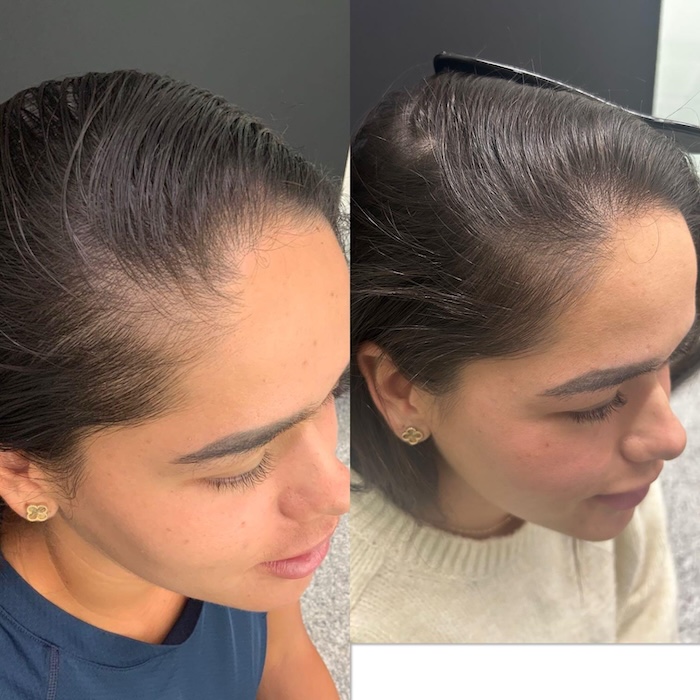
Check out some of the results (before and after photos), achieved at our clinic. These are actual patient results:
Because we're creating controlled micro-injury to the scalp, some temporary effects are normal and expected. You might notice redness and warmth straight after, some mild swelling or tenderness, a little flaking or pinpoint scabbing as it heals, or a temporary increase in shedding in the first few weeks. That last one can be alarming if you're not expecting it, but it's actually part of the process it usually settles quickly.
Downtime is minimal. Most people are back to work the same day. I ask patients to avoid heavy exercise, heat, and sweating for 24–48 hours, hold off washing their hair for the first 24 hours to let the serum absorb, and stick to gentle, sulfate-free products while the scalp heals. Sun protection and staying well hydrated also help, as does keeping up with a nutrient-rich diet adequate protein, omega-3s, and key vitamins and minerals support everything we're trying to achieve in the clinic.
ProCell is worth considering if you're an adult experiencing thinning or mild to moderate hair loss, you'd prefer to avoid injections, or PRP has been ruled out for medical reasons. The key is having dormant but still viable follicles which is something I assess at your consultation.
During treatment, most patients describe the sensation as tingling or light prickling. It's well tolerated, and sessions are straightforward with no real downtime to plan around.
Whether you're curious about PRP, ProCell, or just want to understand what's causing your hair loss and what your options are, I'd encourage you to book a consultation. We'll look at the full picture your health, your history, your hair and work out together what makes the most sense for you. There's no one-size-fits-all answer, but there's almost always something we can do.